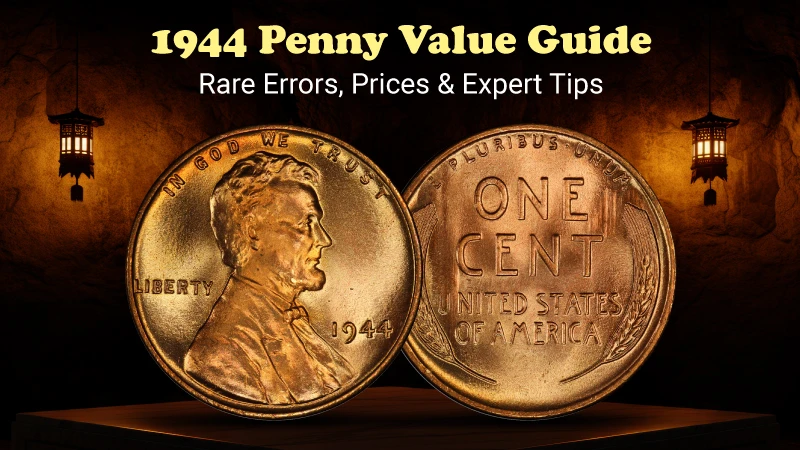
The 1944 united states penny is one of the most discussed and researched coins in American numismatics. It comes from the famous Lincoln Wheat cent series, a coin family that ran from 1909 to 1958. Yet among all those years, the 1944 penny stands out because it reflects an important turning point during World War II.
In 1944, the United States Mint returned to copper after the unusual 1943 steel penny experiment. This shift created several uncommon situations, special metal mixtures, and a few extremely rare errors. Because of these events, the 1944 united states penny is both historically meaningful and fun to collect.
This article takes a deeper look at the coin’s history, composition, production methods, varieties, errors, grading, storage, and long-term investment value. Everything is written in clear and simple language so readers of all levels can enjoy it.
The Historical Context of the 1944 United States Penny
America at War
The year 1944 was critical for the United States. American forces fought in Europe and Asia, and the country was using huge amounts of metal for:
- Ammunition
- Tanks
- Equipment
- Communication wires
Copper was especially valuable because it was needed for:
- Shell casings
- Electrical components
- Motors
- Radios
To save copper for the war effort, the Mint changed the penny’s metal in 1943. That year’s penny was made from steel coated with zinc, giving it a silver-gray appearance.
But steel pennies had problems:
- They rusted
- They jammed machines
- They confused people who thought they were dimes
Because of these issues, the Mint reversed course in 1944.
Also Read: Fintechzoom.com Nickel: A Complete Guide for Investors and Learners
Why 1944 Marked a Turning Point
In 1944, the Mint returned to copper, but not new copper. Instead, they used recycled ammunition shell cases collected from military training grounds and battlefields. These shell cases were melted down, purified, and turned into penny planchets.
This recycling program made the 1944 united states penny a symbol of wartime resourcefulness.
A Coin Connected to Patriotism
Every 1944 penny tells a story. It represents:
- The American war effort
- Recycling to support soldiers
- Economic adaptation
- National unity
This deeper meaning is one reason collectors value the 1944 united states penny so much.
Detailed Physical Features of the 1944 United States Penny
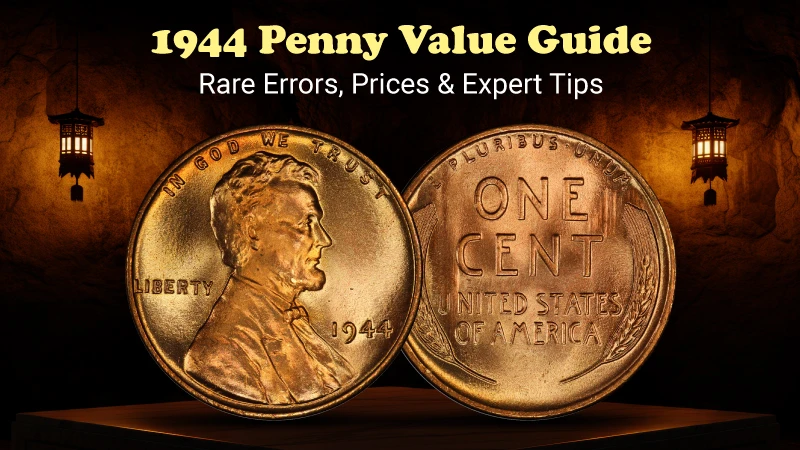
Obverse Design Features
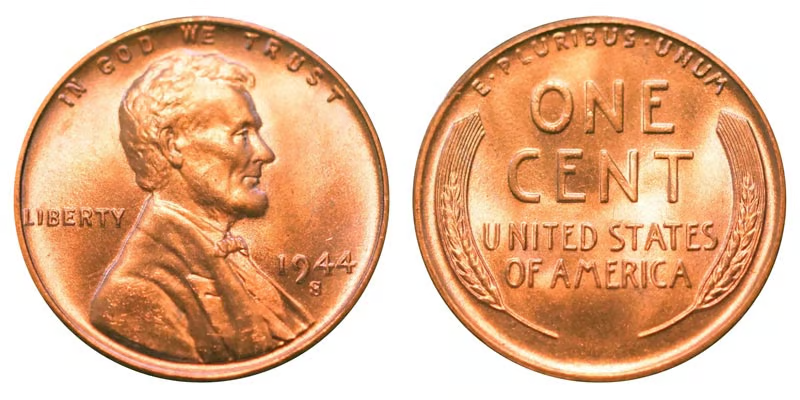
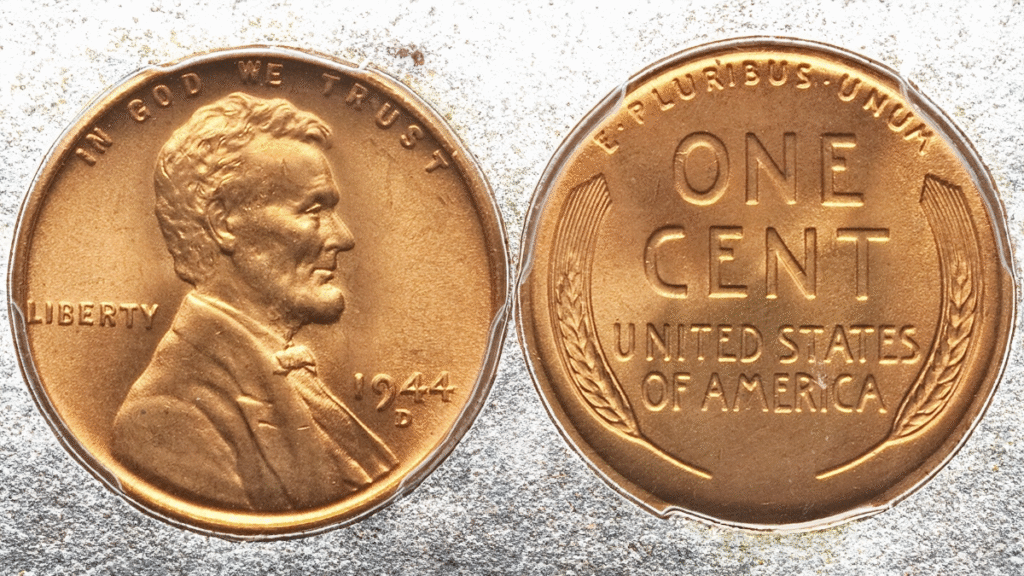
The front of the coin features:
- Abraham Lincoln’s detailed profile
- The phrase IN GOD WE TRUST
- The word LIBERTY
- The date 1944
- A mintmark underneath the date (D or S), unless Philadelphia made it
The 1944 design is part of Victor David Brenner’s original Lincoln portrait introduced in 1909. Brenner’s design was created to honor Lincoln’s 100th birthday.
Short, simple and memorable:
- Obverse = Lincoln’s face
- Reverse = Wheat ears
Reverse Design Features
The back of the 1944 united states penny displays:
- Two wheat stalks, one on each side
- The words ONE CENT
- UNITED STATES OF AMERICA
- The motto E PLURIBUS UNUM
This is why the coin is called a “Wheat Penny.”
Metal Composition
The typical 1944 penny is made of:
- 95% copper
- 5% tin and zinc
This composition is close to the original formula used from 1909 through early 1942.
But because recycled shell casings were used, the metal purity varied slightly. Some pennies show minor color differences:
- More reddish
- More brown
- Slightly darker in some cases
This inconsistency makes each 1944 united states penny unique.
Mints and Production Details
Millions of 1944 pennies were produced in three main U.S. Mint locations.
Mintage Table for the 1944 United States Penny
| Mint | Mintmark | Approx. Mintage | Notes |
| Philadelphia | None | 1,435,400,000 | Most common; no mintmark |
| Denver | D | 430,578,000 | Common; many high-grade coins exist |
| San Francisco | S | 282,760,000 | Lowest mintage of the year |
This massive production makes regular 1944 pennies common today. However, this does not apply to error coins.
All Varieties of the 1944 United States Penny
The 1944 united states penny actually has multiple variations. Some are normal. Some are rare. Some are extremely valuable.
Regular Copper 1944 Penny
Minted in huge numbers. Most people have seen one. They are affordable and easy to collect.
1944-D and 1944-S Varieties
These are standard mintmark varieties. The 1944-S has the lowest mintage but still is not rare.
1944 Steel Penny (Super Rare Error)
In 1944, pennies were supposed to be copper again. But a few leftover steel planchets from 1943 accidentally got struck with the 1944 dies.
This created the very rare 1944 steel penny.
Key facts:
- Only a very small number exist
- Highly sought after by serious collectors
- Magnetic
- Lighter than copper
- Looks silver, not brown
These can reach extremely high prices.
Double Die Errors
Some 1944 pennies show doubling:
- On the date
- On LIBERTY
- On the motto IN GOD WE TRUST
- On ONE CENT
The doubling can be light or dramatic.
Off-Center Strikes
If the coin blank was misaligned during striking, part of the design appears off to one side.
The more off-center it is:
- The rarer the coin
- The higher the value
Wrong Planchet Errors
A few pennies may have been struck on:
- Foreign coin planchets
- Silver planchets intended for other coins
- Thinner or thicker blanks
These errors are uncommon but can be valuable.
Also Read: fintechasia .net crypto facto: A Complete Informative Guide to Crypto Insights, Trends, and Analysis
Value and Pricing Guide for the 1944 United States Penny
Value depends on:
- Condition
- Rarity
- Mintmark
- Whether it is an error
Below is a simple value chart.
Regular Copper Penny Values
| Type | Circulated | Fine | Extremely Fine | Uncirculated |
| 1944 (No mintmark) | Low value | Low | A few dollars | Several dollars |
| 1944-D | Low value | Low | A few dollars | Several dollars |
| 1944-S | Low value | Low | A few dollars | Several dollars |
Error Coin Values
These vary the most.
| Error Type | Typical Value Range |
| 1944 Steel Penny | Extremely high; one of the rarest U.S. coins |
| Strong Double Die | Medium to high value |
| Off-Center (10–50%) | Moderate to high |
| Wrong Planchet | Often very high |
| Broadstrikes | Moderate |
The 1944 united states penny is a clear example of how small minting mistakes can create major value.
How to Identify a Genuine 1944 Steel Penny
Many people want to know if they found one. Here is a deeper guide.
The Magnet Test
- Steel = magnetic
- Copper = not magnetic
A quick magnet test is the easiest method.
Weight Test
Use a digital scale.
- Copper penny weight: ~3.11 grams
- Steel penny weight: ~2.7 grams
If your coin weighs close to 2.7 grams, it may be real steel.
Color Check
Steel pennies are:
- Silver-gray
- Smooth
- Sometimes darker if aged
Copper pennies are:
- Brown
- Red
- Sometimes darker chocolate tone
Size and Thickness
Steel planchets were slightly different in thickness. A genuine 1944 steel penny will look slightly thinner than a copper one.
Check for Fake Coins
Some fakes are simply copper pennies plated with zinc or chrome. These will:
- Look shiny
- Fail the weight test
- Fail the magnet test
Because the 1944 steel penny is extremely rare, expert authentication is important.
Grading the 1944 United States Penny
Why Grading Matters
Grading describes a coin’s condition. Higher grade = higher value.
Simple Grading Guide
Good (G)
- Worn surfaces
- Letters readable
- Not much detail
Fine (F)
- Some detail visible
- Light wear
Very Fine (VF)
- More detail
- Wheat stalks visible
Extremely Fine (XF)
- Sharp details
- Lightest wear only
Uncirculated (MS)
- No wear
- Bright color
- Highest value
Collectors prefer uncirculated examples of the 1944 united states penny because millions were made, meaning high-quality ones survive.
Red, Red-Brown, and Brown Colors
Copper coins are graded on color:
- RD = Red
- RB = Red-Brown
- BN = Brown
Red coins are worth more.
The Science Behind the Metal: Why Shell Cases Changed the Penny
What Were Shell Cases Made Of?
Most wartime shell casings were brass:
- Mostly copper
- Some zinc
- Sometimes small amounts of tin
How the Mint Recycled Them
The process included:
- Collecting used casings
- Removing primers
- Cleaning and polishing
- Melting into pure metal
- Rolling into sheets
- Punching penny planchets
Because of this recycling, the 1944 united states penny carries the history of actual wartime materials.
Comparing 1944 Cents With Other Years
1943 vs 1944
| Feature | 1943 Penny | 1944 Penny |
| Metal | Steel | Copper |
| Color | Silver | Brown/Red |
| Magnetism | Yes | No |
| Rarity | Common | Common (rare errors exist) |
1944 vs 1945
The 1945 penny also used recycled brass but in lower amounts. The 1944 version is generally considered more “wartime” in spirit.
Collecting the 1944 United States Penny
Why It’s a Beginner-Friendly Coin
- Affordable
- Easy to find
- Simple to understand
- Rare errors add excitement
Storage Tips
To protect the coin:
- Use coin flips
- Use capsules
- Avoid PVC holders
- Keep coins dry
- Avoid touching with bare fingers
What to Look for When Buying
- Strong details on Lincoln’s hair
- Sharp wheat lines
- Clean fields (background areas)
- Minimal scratches
Collectors love crisp details on a 1944 united states penny because it shows the full beauty of the Wheat design.
Myths and Misunderstandings About the 1944 Penny
Myth 1: All 1944 pennies are rare.
False. Only error coins are rare.
Myth 2: All silver-looking pennies are valuable.
False. Many are plated fakes.
Myth 3: The 1944 penny is made of pure copper.
Incorrect. It is 95% copper, 5% tin and zinc.
Myth 4: 1944-S pennies are extremely rare.
Not rare—only lower mintage than Philadelphia or Denver.
Understanding these myths helps collectors avoid mistakes.
Long-Term Investment Potential
Even though most 1944 pennies are common, they still hold investment value as:
- Historical artifacts
- Copper-based coins
- Part of popular series
- Coins with famous errors
The 1944 united states penny remains one of the most collected coins in America.
Summary
The 1944 united states penny is a coin packed with history, charm, and surprising variety. It was made from recycled brass shell casings during World War II, giving it a special connection to the American war effort. Most 1944 pennies are common, yet the rare 1944 steel penny stands among the most valuable U.S. coins ever made.
From double die errors to off-center strikes, the 1944 penny offers endless opportunities for collectors. Its simple Wheat design, wartime story, and metal mixture make it a fun and educational coin for beginners while also appealing to experts.
Anyone who enjoys history, coins, or treasure hunting will find the 1944 united states penny a fascinating part of American numismatics.